How European Roulette Payouts Work From Straight Up Bets to Outside Odds
Contents ▾
There is a timeless magnetism in the whirl of a European roulette wheel. From smoky Monte Carlo rooms to digital screens across the globe, the game's green baize and spinning silver ball beckon thrill-seekers and careful strategists alike. But beneath the surface allure lies a world of numbers, odds, and calculated risks - all pivoting around the essential concept of payout. Understanding European roulette payout isn't just about fantasy wins or notorious losses: it is the key to unlocking the game's structure, its realities, and your own chance at a piece of the action.
For newcomers, the spinning wheel can appear to be a game of pure chance. Yet, for the informed and curious, each bet on European roulette tells a mathematical tale shaped by probabilities, rewards, and an ever-active house edge. Every wager - whether a single lucky number or a broad streak of red - comes with its own expected payout and a subtle give and take with the casino's built-in advantage. Knowing how roulette payouts work is not merely trivia; it's an essential tool for making better decisions at the table and managing your gameplay responsibly.
With a single-zero wheel, a distinctive set of bets, and a reputation for offering players a fighting chance, European roulette stands apart from other variations. Its payouts, while glamorous, are crafted with meticulous fairness in mind. This comprehensive guide delves deep into the structure of European roulette payouts, illuminating their odds, their nuances, and the elegant balance of chance and calculation that has made this classic game a lasting favorite for generations.
The Single Zero Secret: Why European Roulette Offers Better Value
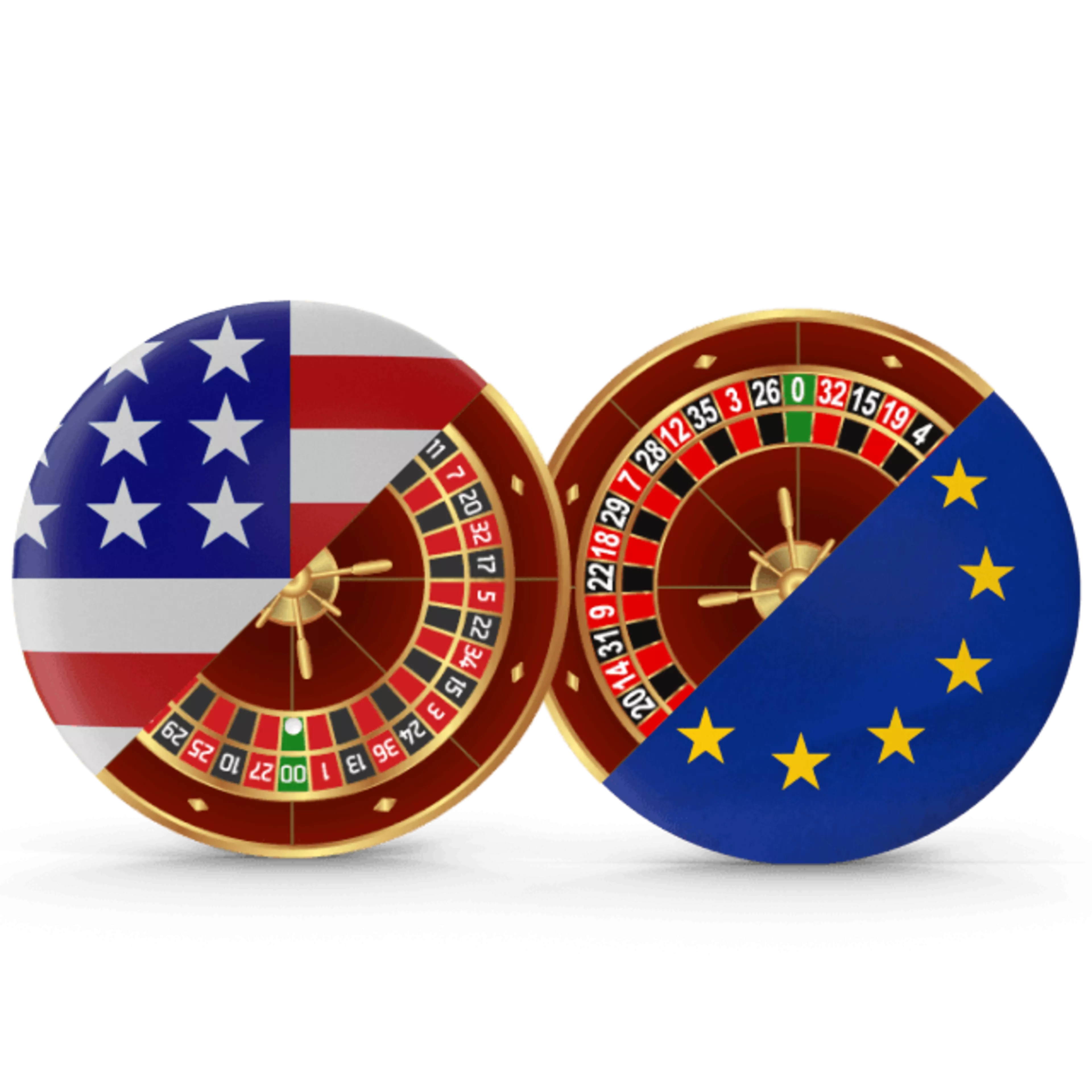
One of the most profound aspects of European roulette - and the reason for its widespread popularity among discerning players - is its single zero pocket. Unlike American roulette, which sports both "0" and "00," the European variant limits this to just one green zero. This seemingly small detail ripples through the entire game, directly influencing the payouts and your odds on every spin.
The wheel itself holds 37 pockets, numbered 1 through 36 plus a solitary zero. This structure is not arbitrary. With each spin, the probability of any single outcome is precisely 1 in 37. What does this mean in terms of payout? The answer lies in how the casino structures each wager. Payouts for all bets, from a solitary straight-up to a sprawling bet across dozens, are paid as if there were only 36 pockets in play - yet the true odds always include the ever-present zero.
This mathematical sleight of hand gives the house its margin, or edge, amounting to 2.70% in the European game. For every $100 wagered, statistically, the expected loss is $2.70 over the long term. While it might sound modest, this edge is dramatically lower than the 5.26% found in American roulette, where the extra double zero sharpens the casino's advantage at the expense of the player.
For players weighing their options, the implication is clear: European roulette offers superior value. The probability of winning on even-money bets is a little under 50%, adjusted downward from true odds because of the green zero. With less siphoned away by the house, your bankroll stretches further, and your flirtation with luck can last longer. For those passionate about extracting the most from every wager, the single-zero European roulette wheel simply makes better sense.
It's also essential to recognize the perils of outlier variants, such as triple-zero roulette wheels, which balloon the house edge to a punishing 7.69%. These tables may offer glitz and novelty, but their mathematics are ruthlessly stacked against regular play. Always take the single-zero path when given a choice, and let the numbers tilt just a little more in your favor.
Best options for European Roulette in your region
Payouts Unveiled: Breaking Down Every Bet on the Table
To truly master the European roulette payout, you must develop an intimate appreciation for the entire array of wagers the game presents. The table is not a monolith - it is a landscape of inside bets, outside bets, and specialty options, each with its distinctive balance of risk and reward.
Inside bets are the daring heart of roulette, letting you target specific numbers or snug groups. Their payouts are the highest, but their hit rate is low. The most iconic is the straight-up bet: a wager on any single number, including zero. Should lightning strike and your number hit, the payout is 35 to 1. This means a $1 bet would pay $35 plus your original dollar back, but the actual chance is just 1 in 37. It's the siren song of roulette - easy riches, clouded by long odds.
Less audacious, but still rich, is the split bet, cast across two neighboring numbers. This pays 17 to 1, reflecting the doubled chance but still a steep hill to climb. If you stake a street bet, covering a sequence of three numbers in a row, you win 11 to 1. The corner bet branches further, spanning four numbers in a square pattern for an 8 to 1 payout. Push to six numbers in two adjacent rows via the six line or double street bet, and any hit pays 5 to 1. There are further specialties, like the trio bet (including at least one zero) at 11 to 1, and the specific four-number "first four" (0, 1, 2, 3) at 8 to 1.
| Bet Type | Numbers Covered | Payout |
|---|---|---|
| Straight-Up | 1 | 35 to 1 |
| Split | 2 | 17 to 1 |
| Street | 3 | 11 to 1 |
| Corner (Square) | 4 | 8 to 1 |
| Six Line (Double Street) | 6 | 5 to 1 |
| Trio | 3 (with zero) | 11 to 1 |
| First Four | 0, 1, 2, 3 | 8 to 1 |
Contrast this with the outside bets: larger group wagers with more frequent smaller wins. Red or black, odd or even, or high (19-36) and low (1-18) are all even-money bets, paying out 1 to 1. With 18 numbers on each side and the zero breaking symmetry, your true winning chance is about 48.65%. Dozens and columns, covering 12 numbers each, pay 2 to 1 for a hit, with a probability of 32.43%.
It's vitally important to grasp that, though payouts differ and the number of winning outcomes varies, the underlying house edge is constant at 2.70%, thanks to the zero. The more numbers you cover, the likelier you are to see a small return; the fewer, the richer but rarer the rewards. This architecture is at the core of every informed roulette session.
Even-Money Bets Under the Microscope: The Impact of Zero and the "French Touch"
At first glance, the simplest outside bets - red/black, odd/even, low/high - appear the most approachable. With 18 numbers apiece, it feels like a 50/50 shot, making these bets the darlings of cautious players and seasoned strategists alike. Yet the green zero pocket quietly upsets this balance. Zero counts for none of the even-money categories, skewing the true probabilities slightly below the halfway mark and cementing the house's edge.
When a spin lands on zero, all even-money bets automatically lose. The probabilities reflect this: take any even-money wager and you'll win 18 out of 37 times, making your chance of a payout 48.65%. The payout, however, remains even at 1 to 1, aligning with the illusion of fairness but consistently feeding the casino its 2.70% share.
European roulette sweetens the picture with two elegantly simple French rules, La Partage and En Prison, sometimes offered in select casinos and online tables. These rules only apply to even-money bets and can substantially improve a player's odds against the house. With La Partage, when zero appears, you recover half your stake instead of losing it all. En Prison, meanwhile, holds your losing wager "in prison" for a second spin: if your bet wins next time, it's returned; if not, it's lost.
Both rules reshape the house edge against you. With La Partage or En Prison in play, the edge on even-money bets drops from 2.70% to a tantalizing 1.35%, halving the casino's advantage for those bets. This is the apex of player value in European roulette and an excellent choice for those who cherish the slow burn of small, steady wins.
Take note that not all venues or digital platforms offer these French rules as a default option - always check table rules before settling in. When available, pairing even-money bets with La Partage or En Prison brings European roulette payouts closer to statistical perfection for the prudent player.
Inside Bets: Big Dreams for the Bold at the European Roulette Table
If outside bets are for steady nerves and slow buildups, inside bets are for thrill-seekers craving instant drama. Every number or tight cluster targeted in an inside wager swings between the possibility of a windfall and the likelihood of a miss, and that's exactly the allure. Mastering the payouts on these wagers is the passport to the game's most legendary moments.
The straight-up bet is roulette's crowning glory. One number, one dream. With the ball in motion, hope electrifies the moment, for if the number hits, the payout is 35 to 1, the richest regular reward at the table. But the odds are long, with a 2.70% chance, since the payout is modeled on a 1-in-36 probability while the real wheel has 37 positions. The zero, as always, tips the balance in the house's favor.
Seeking slightly better odds, one might pivot to split bets, casting a chip across two adjacent numbers. This halves your risk and, if successful, pays 17 to 1. Street bets cover three numbers in a row, offering an 11 to 1 payout; corner or square bets collect four numbers forming a square for 8 to 1; and the six line bet takes two rows (six numbers) for a 5 to 1 payout. Trio and first four bets, which incorporate zero, pay 11 to 1 or 8 to 1 respectively.
In the heat of play, it is worth remembering the seductive draw of inside bets comes harnessed to statistical rarity. Over time, losses will naturally dominate, though the occasional win can be transformative. The more specific your bet, the steeper the payout - but only sporadically will these exhilarating moments arise.
European roulette's honest mathematics means all inside bets, flamboyant or reserved, are bounded by the same 2.70% house edge. Thus, while the psychology of roulette tempts us to see patterns and streaks, each inside bet is a contest between luck and probability - with the house's calculated advantage always a step ahead. For those who chase fortune, these are the bets that keep hearts racing and stories swirling long after the chips are cleared away.
Outside Bets and Bet Combinations: Finding Your Rhythm (and Why It Matters)
Not every roulette player seeks fireworks. There is a countercurrent to the game and it flows through steady, incremental gains via outside bets. The beauty here is simple: betting larger groups gives you more frequent wins, though the rewards shrink in proportion. Yet for those who appreciate pacing, bankroll preservation, and the calm accumulation of small successes, these bets are the backbone of a sustainable roulette session.
Even-money bets such as red/black, odd/even, or high/low are the standouts, each with their 1 to 1 payout for almost-half chances (just shy of 50%, humbled by the zero). Then come dozen and column bets, sweeping a third of the table (12 numbers apiece), each paying 2 to 1. Here, the chance of a hit is 12 in 37, or 32.43%. You may also find specialty called or announced bets - typically available in racetrack sections and favored by advanced players for their creative configurations. These rarely change the base house edge but add spice through variety.
A key principle ties together outside bets: the more ground your chips cover, the greater your probability of a win - but the smaller the payout. This sliding scale gives players room for a tactical blend: some may combine inside and outside bets to balance risk, while others spread their wagers across several outside options to create a web of smaller, overlapping wins.
It's this malleability that gives European roulette its lasting appeal. Whether you seek volatility or crave methodical progress, bet selection can be tailored to personal rhythm and temperament. And regardless of style, the odds remain anchored to that unwavering 2.70% house edge, unless you leverage those rare tables where the French rules can tip the balance for even-money wagers. Carefully crafting your bet mix, and understanding the true payout for each scenario, is the bridge between reckless gaming and strategic, enjoyable play.
Chasing the Numbers: Calculating Probabilities and Setting Expectations
The heart of every roulette payout, and every player's roulette strategy, beats with probability. The table is a stage for chance, but behind every wager lurks exact mathematics. Understanding how the odds are set lets you enter each spin with realistic expectations and a measured approach.
For any bet, the probability of a win is simply the number of covered outcomes divided by 37 (the pockets on the wheel). Betting a single number? That's 1 in 37. Betting red? That's 18 in 37. Each wager's payout is designed to keep the house ahead, with the math tilting their way at every turn. Even the most generous bet - the straight-up - pays 35 to 1, but your chance to win is 1 in 37, not 1 in 36. This misalignment is the source of the house edge.
An example can clarify: let's say you make 37 one-unit bets, one on each number. You're guaranteed a win (unless zero wins twice). Your payout is 35 units, and reclaiming your stake means a net result of -2 units. The house retains its theoretical 2.70% edge, as it does on every configuration, over the long haul.
For players, there is power in this knowledge. It reveals that, over the infinite future, no system, no pattern, no intuition can bend the cold calculus underpinning the game. Yet, variance and luck can shape thrilling short runs. The wise player accepts this duality: the rollercoaster of chance, bound in the long term by arithmetic certainty.
Understanding these probabilities also sharpens bet selection and bankroll management. Every win (or dry spell) is contextualized by statistical norms. Chasing losses with larger, riskier bets rarely conquers the math, but a savvy mix of wagers aligned to your risk profile - and solid awareness of the true probabilities - can stretch sessions and increase enjoyment.
European Roulette in the Wider World: Why It Remains the Pinnacle of Fair Play
There is no denying that European roulette holds a legendary place in gaming circles, from luxurious casinos to the digital realm. The reason is as much about fairness as it is about glamour. While other versions of the game continue to spread, none can match the player-friendly payout structure and the statistical honesty of the single-zero wheel.
The presence of just one zero elegantly trims the house edge, allowing for deeper, more sustained sessions. Across continents and time zones, informed players actively seek out European roulette for this advantage, whether on a casino floor in London or an online game in their living room. American and triple-zero wheels are approached with caution or avoided entirely, as their inflated house edges ultimately siphon away more from player bankrolls in the long term.
Understanding the payout tables and odds embedded in European roulette equips players to participate as equals in the psychological dance with chance. The game's universal appeal rests in this careful balance: offering the possibility of windfall rewards while grounding those hopes in a transparent system. Every spin is a story, a promise - with the odds and payouts shaping the plot in ways both dazzling and fair.
For anyone moved by the anticipation, elegance, and intellectual appeal of roulette, the European version remains the definitive choice. Its consistent payout rules, lower edge, and embrace of rules like La Partage and En Prison make it unrivaled in both integrity and excitement. In the end, knowledge of its payouts is not just about maximizing potential profit, but about savoring every moment as part of a game that has enchanted players for centuries.